
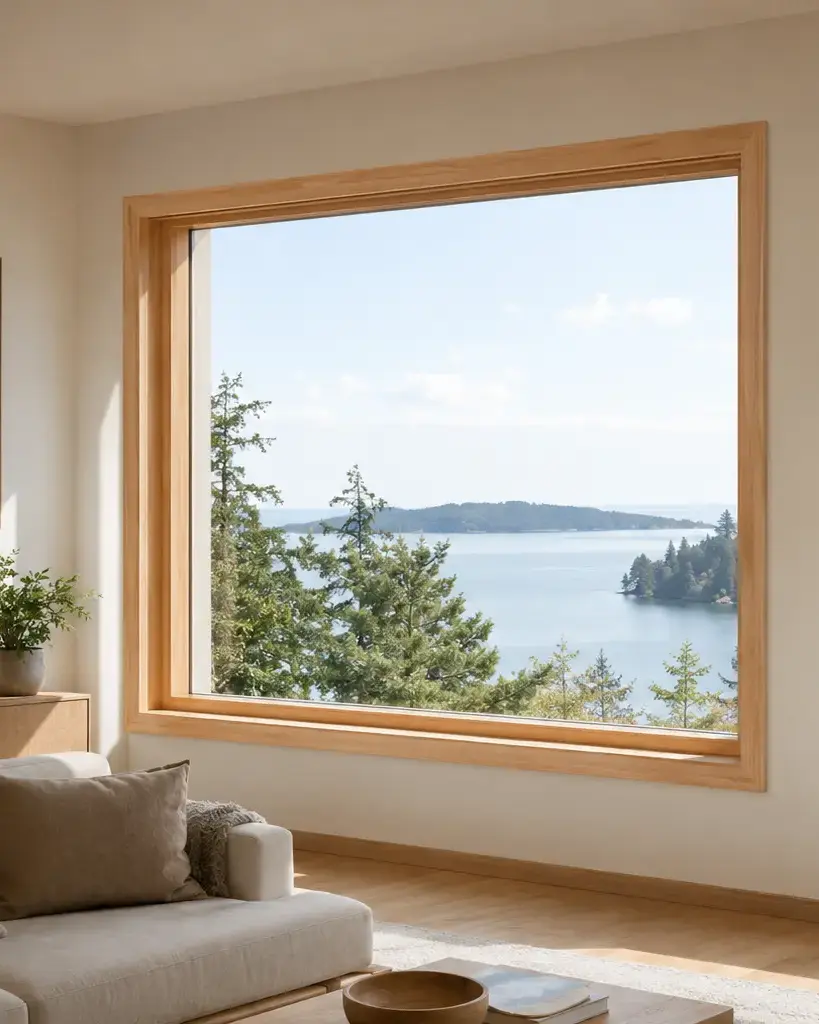
What is a picture window?
A picture window is a fixed window: it does not open and does not require operating hardware. Its job is to bring in light, frame a view and complete the building envelope with as little visual interruption as the design allows.
Fixed does not mean generic. Picture windows can be rectangular, tall, wide, triangular, rake-shaped or combined with operable windows and doors. The frame and glass still need to be engineered for the opening size, wind pressure, glass weight and project exposure.
Why fixed windows can perform so well
An operable window needs hinges, locking hardware, sash clearances and additional seals. A picture window eliminates the operating joint. That simpler construction can support excellent airtightness and reduce the amount of frame required within the opening.
The result is not automatically a high-performance window. Frame material, insulated-glass construction, spacer, low-e coatings, gas fill, installation and thermal bridging still matter. The advantage is that a fixed opening gives the designer fewer moving parts to resolve.
More glass is useful—but proportion matters
Picture windows are often selected to maximize glass area. Increasing glass relative to frame can improve the view and may improve the overall thermal result when the glazing performs better than the frame. It can also increase solar gain, summer cooling load, glare and the structural demands on the glass.
The best opening is not simply the largest pane that can be manufactured. Orientation, overhangs, exterior shading, interior comfort, bird-safe requirements, privacy and the view itself should shape the glass specification.
Combine picture and operable windows deliberately
A high-performance home still needs a ventilation strategy, but every pane does not need to open. Mechanical ventilation can manage background air quality while selected tilt-and-turn, casement or awning windows provide seasonal and occupant-controlled ventilation. The tilt-and-turn versus casement guide compares those operable choices directly.
This creates a useful hierarchy: picture windows at primary views, operable windows where air movement is useful, and doors where circulation connects indoors and outdoors. Matching frame systems allow fixed and operable units to read as one composition.
- Use fixed panes for uninterrupted views and larger glass areas.
- Place operable windows where occupants can reach and use them safely.
- Coordinate mullions with interior walls, cabinetry and exterior cladding lines.
- Keep operable areas sufficient for code and project ventilation requirements.
- Review glass thickness and heat treatment for the final pane dimensions.
Comfort is the real measure of performance
A beautiful window can still be uncomfortable if its interior glass surface becomes cold, if direct sun overheats the room or if air leakage creates a draft. Ask the project team to evaluate the opening as part of the wall, not as an isolated product.
Whole-window U-value, solar heat gain coefficient, interior surface temperature, airtight installation and shading strategy all influence how the room feels. High-performance glazing can make expansive views practical, but it must be selected for the climate and orientation.
What to confirm before ordering large picture windows
Large fixed glazing benefits from early coordination. Confirm the rough opening, structural support, delivery route, lifting plan and installation sequence before manufacturing begins.
- Maximum glass size and weight for the selected frame system
- Required tempered, laminated or heat-strengthened glass
- Whole-window thermal values and project-specific glazing makeup
- Exterior drainage, sill support and flashing integration
- Interior and exterior finish transitions
- Access for delivery, glazing and future replacement
Common questions
Frequently asked questions
Are picture windows more energy efficient than operable windows?
A comparable fixed window can often achieve strong airtightness because it has no operating joint, but the actual result depends on the entire frame, glazing package and installation.
Can picture windows be triple pane?
Yes. Picture windows can use double- or triple pane glazing, subject to the frame system, pane dimensions, glass weight and project performance requirements.
Do high-performance homes still need operable windows?
Most homes benefit from selected operable windows for occupant control, seasonal ventilation and code requirements, even when balanced mechanical ventilation is provided.