Thermal
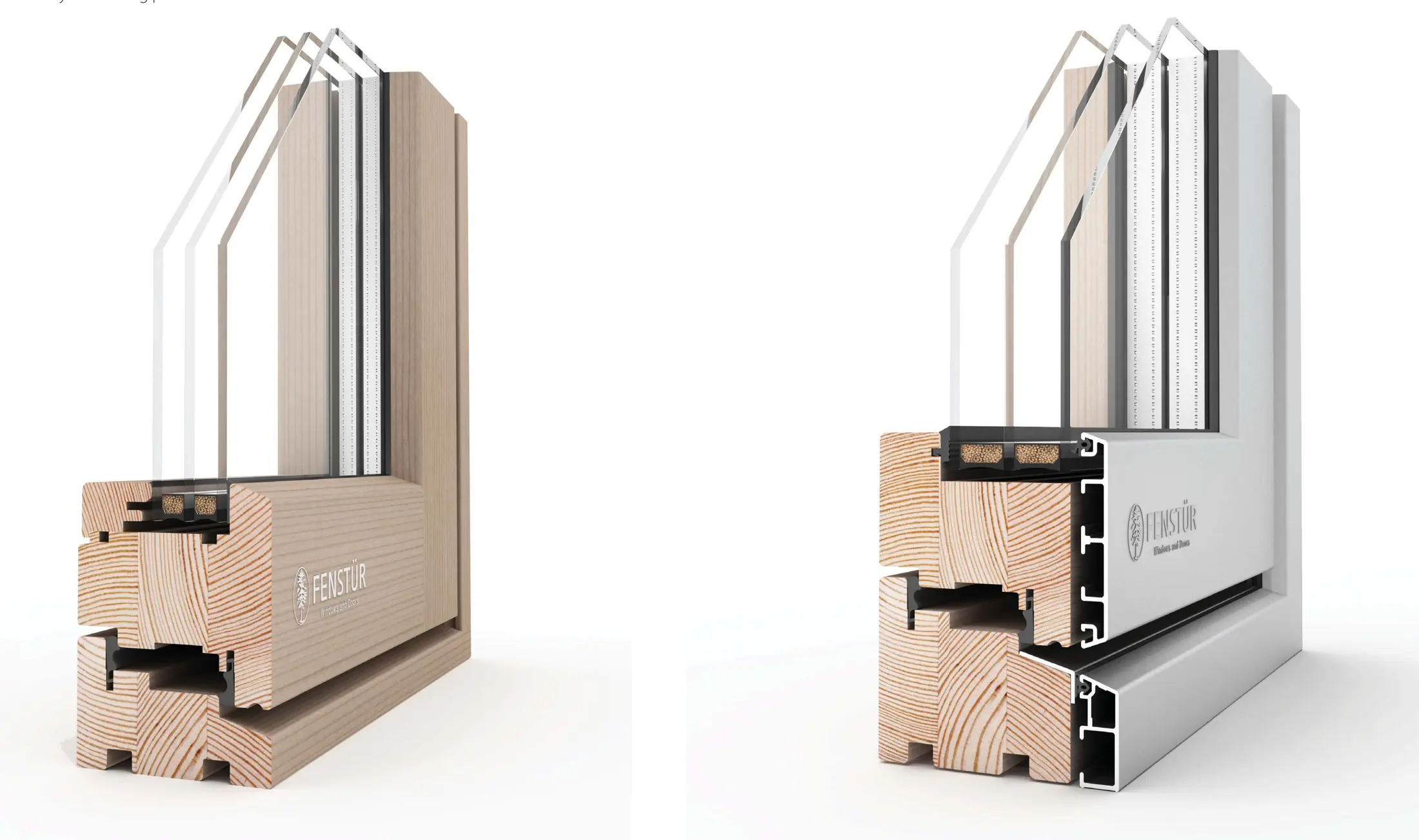
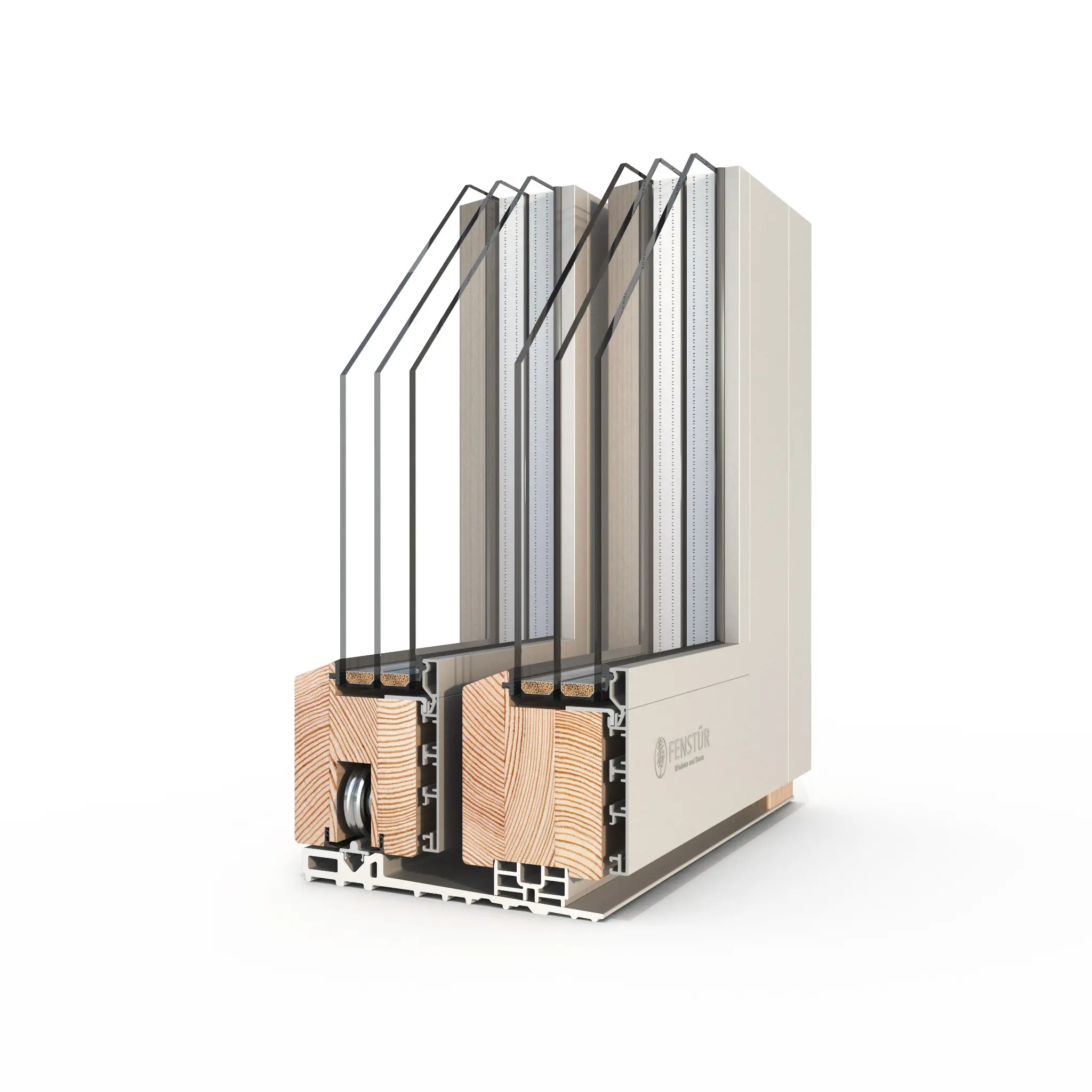
Frame depth, wood species, glass make-up, spacers and coatings work together to control heat flow and interior surface temperatures.

Performance + testing
Fenstür systems are developed for air, water, structural and thermal performance without losing the warmth and flexibility that make wood worth choosing.
Frame depth, wood species, glass make-up, spacers and coatings work together to control heat flow and interior surface temperatures.
Continuous seals, compression hardware, drained details and protected joinery manage pressure, rain and changing weather.
Glass weight, sash size, hardware capacity, wind loads and attachment details guide safe, reliable configurations.
Laminated timber, protected end grain, rounded finish edges and factory-controlled coatings support long service life.
Certified and Passive House-oriented options pair whole-window performance data with practical project support.
Key performance data
Fenstür product lines range from U-value 1.58 down to 0.60 W/(m²·K). Use these glazing bands for early comparison; final values and allowable sizes depend on the exact product, glass, operation and tested configuration quoted for the project.
Double-pane
1.40–1.58W/(m²·K)A practical balance of performance, weight and value.Triple-pane
1.10–1.25W/(m²·K)Improved comfort and reduced heat loss for demanding climates.High-performance triple-pane
0.60–0.99W/(m²·K)Our lowest-U-value glazing packages for very high-performance projects.Thermal performance
NFRC method · W/(m²·K) · 90% argon fill · warm-edge spacer
| Glazing package | Low-e option | U-value | SHGC |
|---|---|---|---|
| Standard double-pane | Sb60 | 1.40 | 0.40 |
| Standard double-pane | S1.16 | 1.48 | 0.61 |
| Premium double-pane · two low-e coatings | Sb60 / Sb60 | 1.36 | 0.37 |
| Premium double-pane · two low-e coatings | S1.16 / S1.16 | 1.41 | 0.57 |
| Standard triple-pane | Sb60 | 1.05 | 0.36 |
| Standard triple-pane | S1.16 | 1.20 | 0.52 |
| Standard triple-pane | DblCoat | 1.10 | 0.34 |
| Premium triple-pane · 2+ low-e coatings | Sb60 · surfaces #2, #5 | 0.70 | 0.34 |
| Premium triple-pane · 2+ low-e coatings | S1.16 · surfaces #2, #5 | 0.75 | 0.48 |
| Premium triple-pane · 2+ low-e coatings | DblCoat · surfaces #2, #5 | 0.75 | 0.32 |
| Premium triple-pane · 2+ low-e coatings | S10 · surfaces #2, #5 | 0.73 | 0.42 |
| Premium triple-pane · 2+ low-e coatings | D70 · surfaces #2, #5 | 0.73 | 0.29 |
These are centre-of-glass values, not whole-window values. Frame, sash, spacer, size and operability all affect the final window U-value.
Tested size guidance
Dimensions are inches. Other sizes may be possible through special design review and engineering.
| Product | Min W | Min H | Max W | Max H | PG | Max operable weight | Note |
|---|---|---|---|---|---|---|---|
| Picture window | 14" | 14" | 60" | 98" | CW70 | n/a | — |
| Picture window | 14" | 14" | 123" | 118" | CW55 | n/a | — |
| Engineered picture window | 14" | 14" | 228" | 228" | Engineering | n/a | 228" maximum in one direction |
| Tilt-and-turn window | 18" | 18" | 60" | 102" | CW70 | 330 lb / 150 kg | — |
| Tilt-only window | 18" | 18" | 96" | 96" | CW70 | 330 lb / 150 kg | — |
| Casement window | 18" | 24" | 34" | 60" | CW60 | 100 lb / 45 kg | — |
| Awning window | 18" | 18" | 96" | 48" | CW45 | 260 lb / 120 kg | — |
| Euro swing door | 30" | 80" | 44" | 96" | CW45 | 660 lb / 300 kg | Maintain at least a 2:1 height-to-width ratio |
| Euro swing door · limited water | 30" | 80" | 44" | 96" | CW75 | 660 lb / 300 kg | — |
| Inswing door · double drilled | 24" | n/a | 36" | 80" | R40 | 660 lb / 300 kg | — |
| Outswing door · double drilled | 24" | n/a | 36" | 80" | R40 | 660 lb / 300 kg | — |
| Inswing door · multipoint lock | 24" | n/a | 60" | 104" | CW40 | 660 lb / 300 kg | — |
| Outswing door · multipoint lock | 24" | n/a | 42" | 96" | R45 | 660 lb / 300 kg | — |
| Outswing French door | 24" | n/a | 42" | 96" | R35 | 660 lb / 300 kg | — |
| Lift + slide · OX | 72" | 80" | 168" | 156" | LC30 | 880 lb / 400 kg | — |
| Lift + slide · OXXO | 144" | 80" | 312" | 156" | LC30 | 880 lb / 400 kg | — |
PG means performance grade under the applicable North American test report. Ratings apply only within the documented system, configuration and size range.
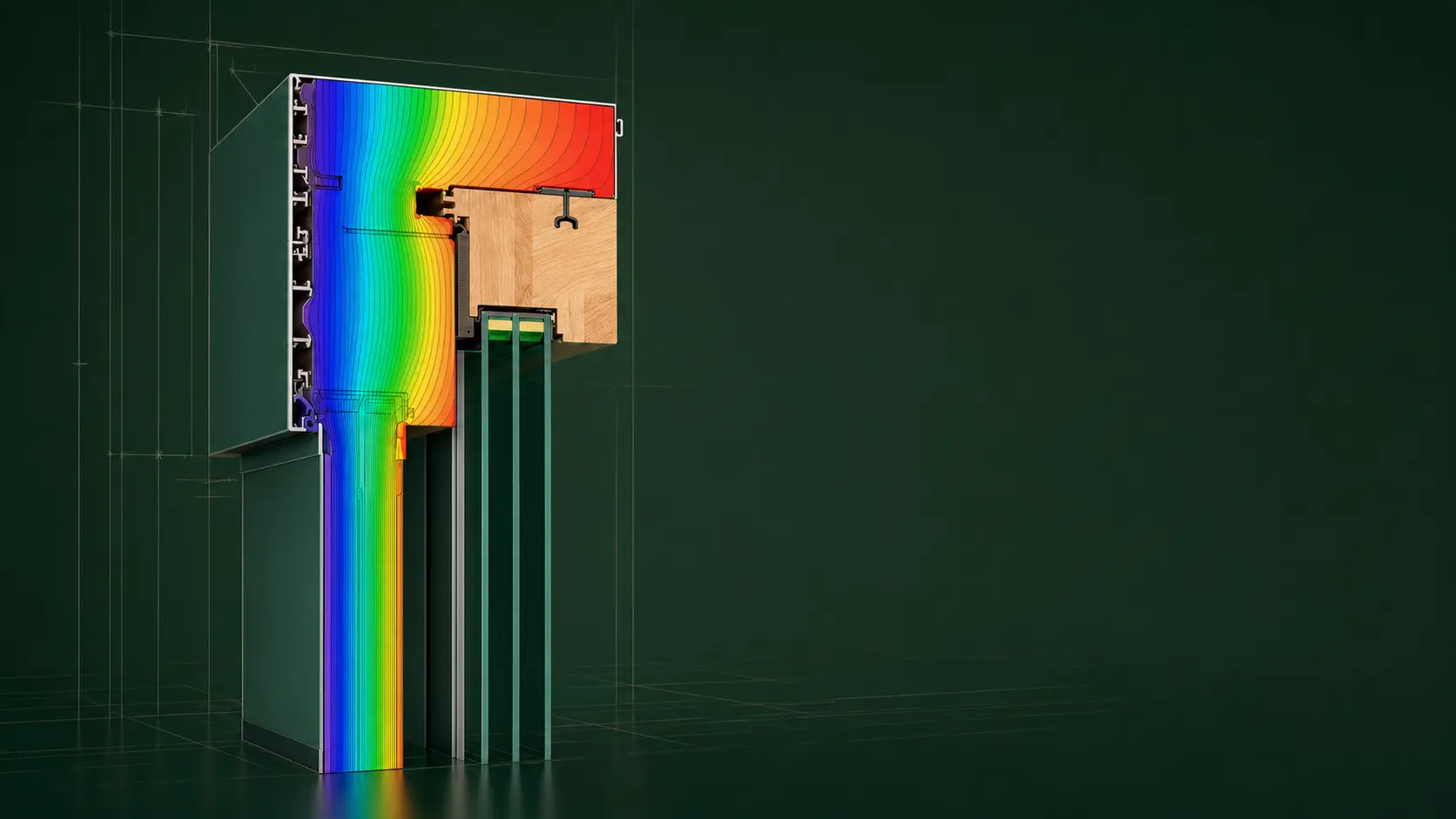
Thermal modelling
We use thermal modelling to study how the frame, glazing, spacer, cladding and critical junctions work together. The analysis helps us refine product details and compare design decisions against measurable performance.
Independent laboratory testing
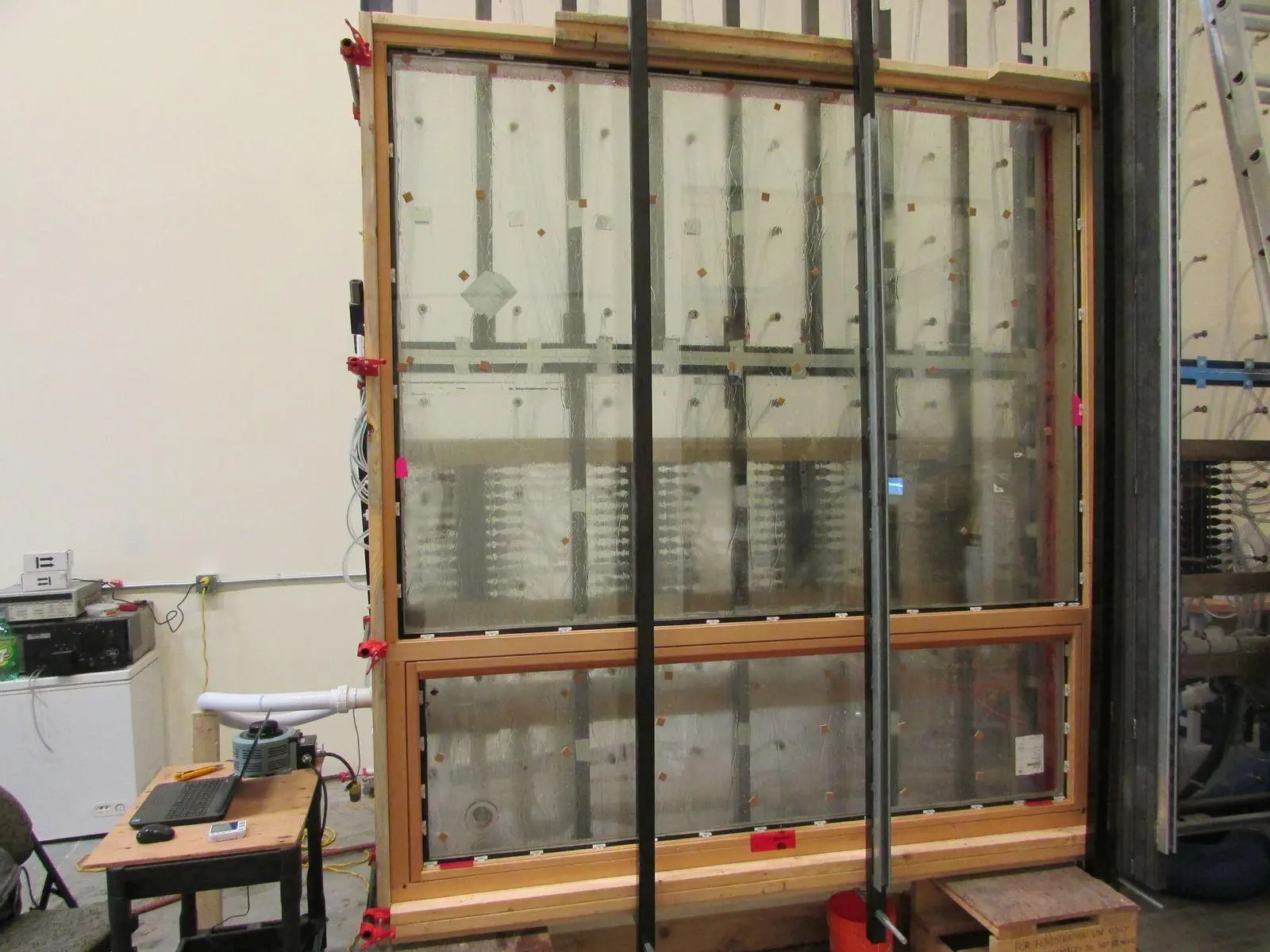
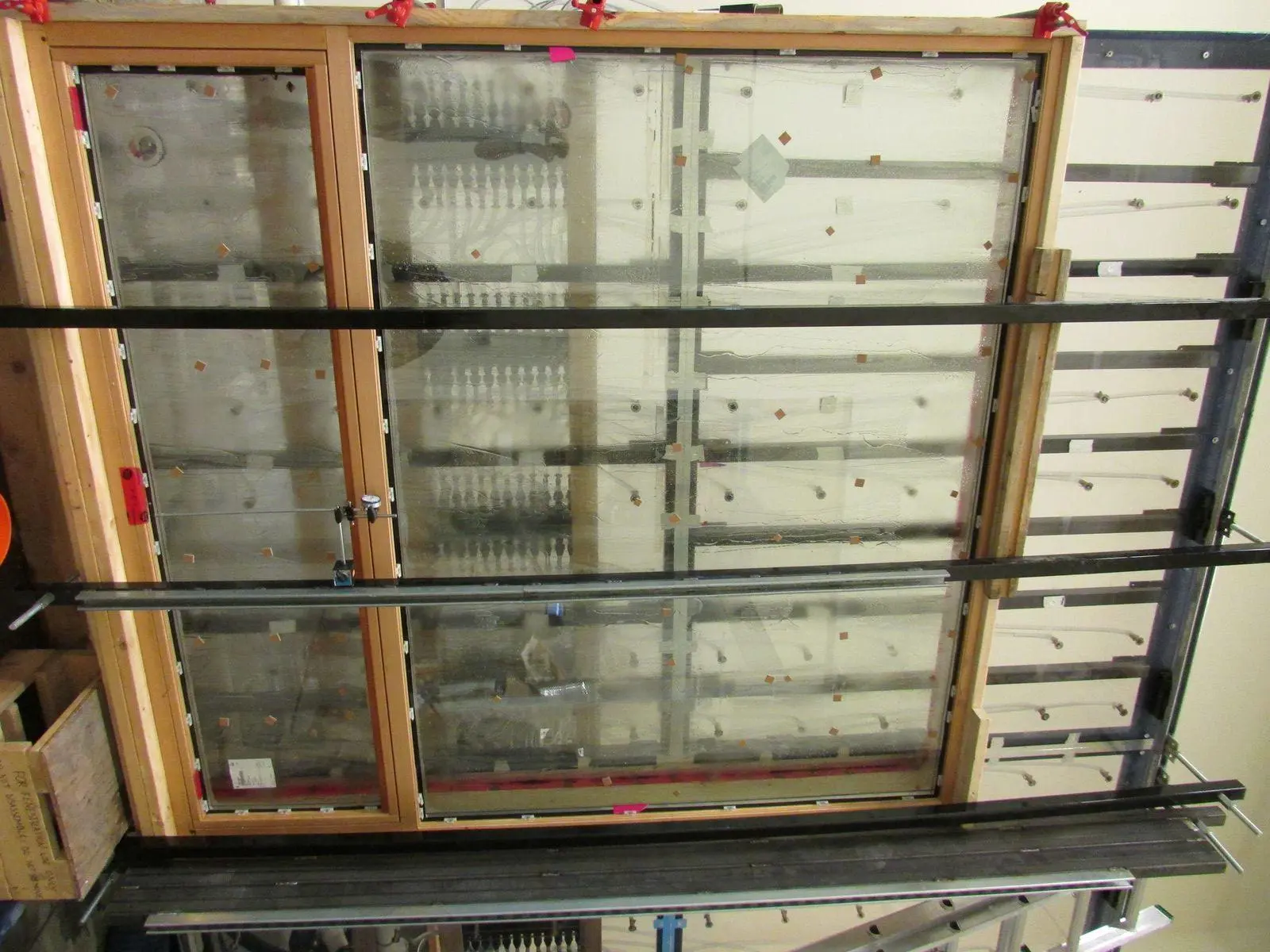
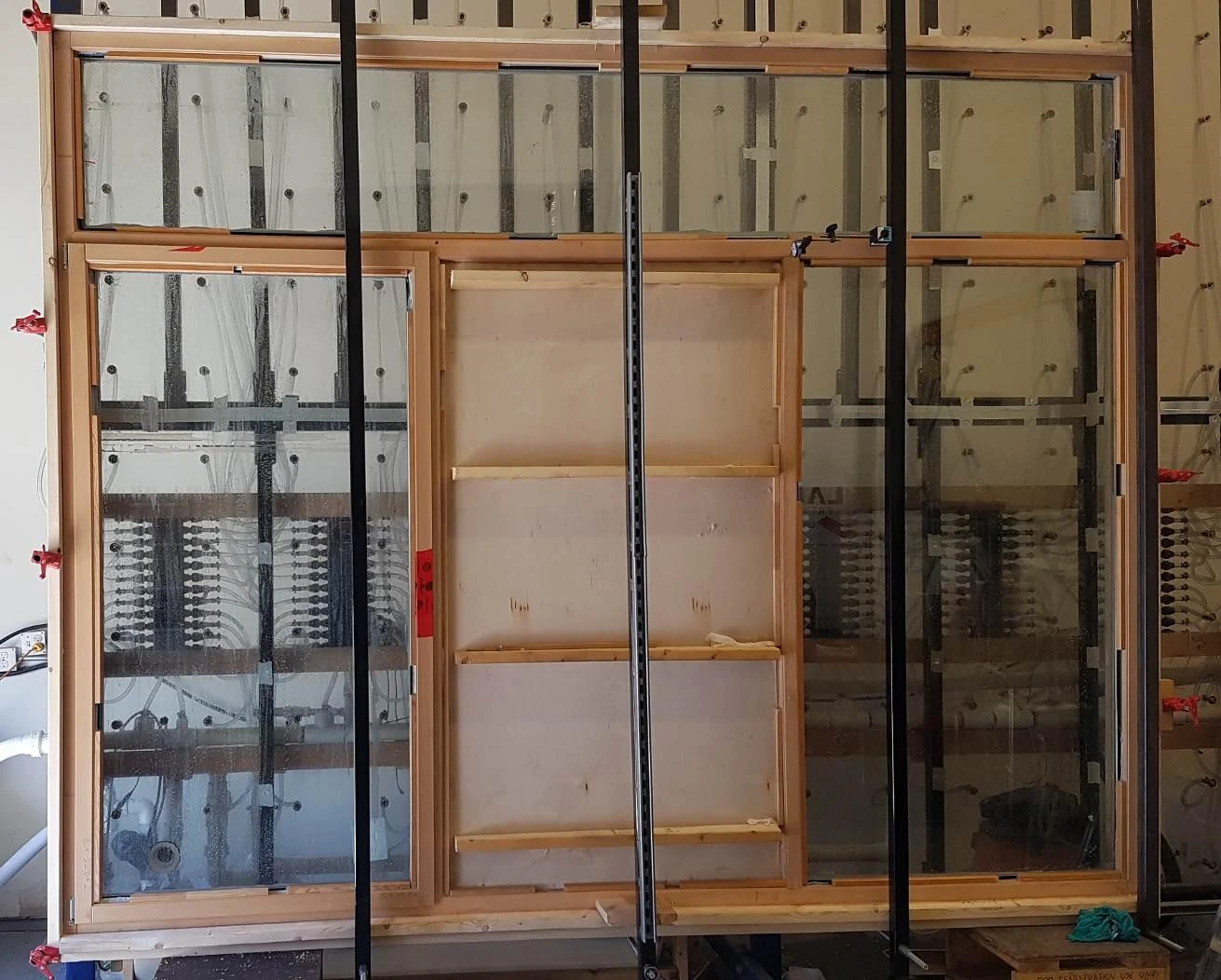
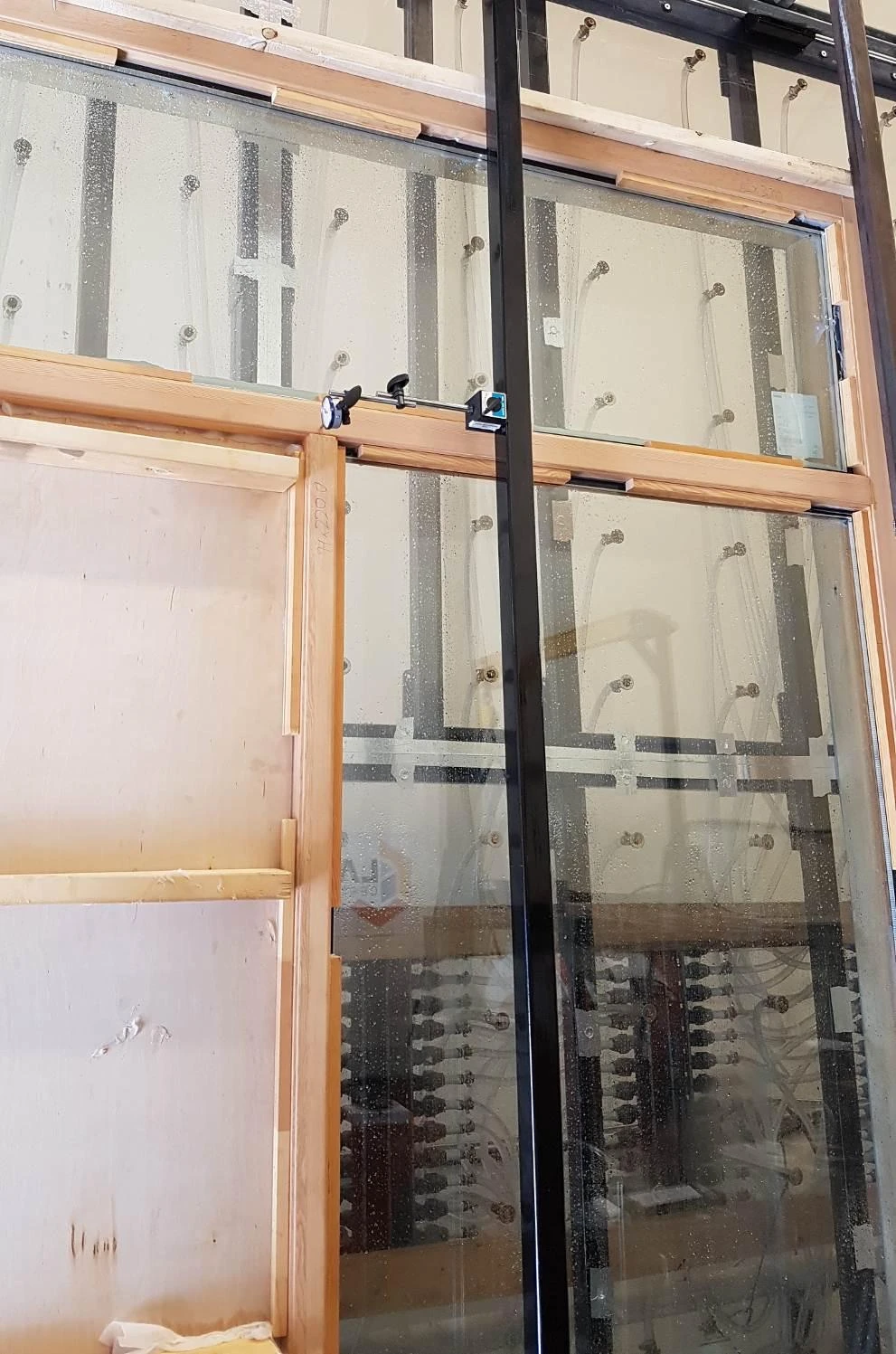
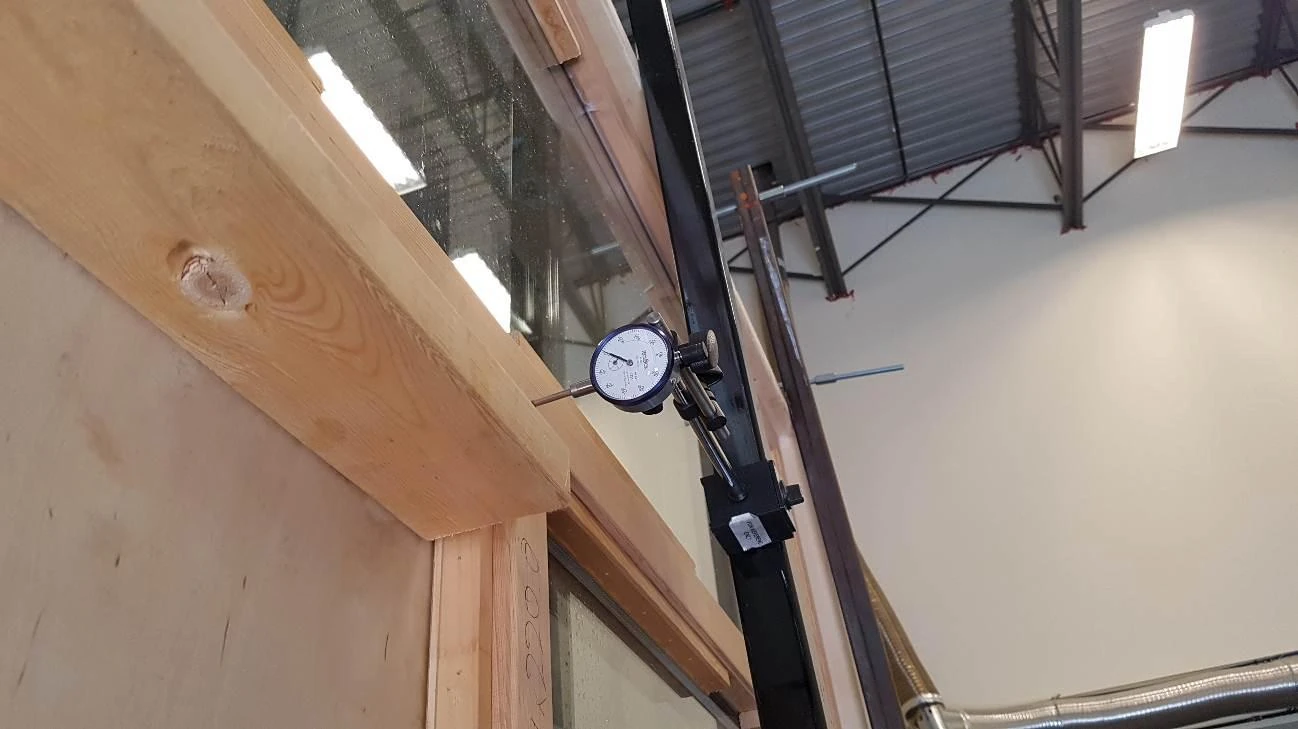
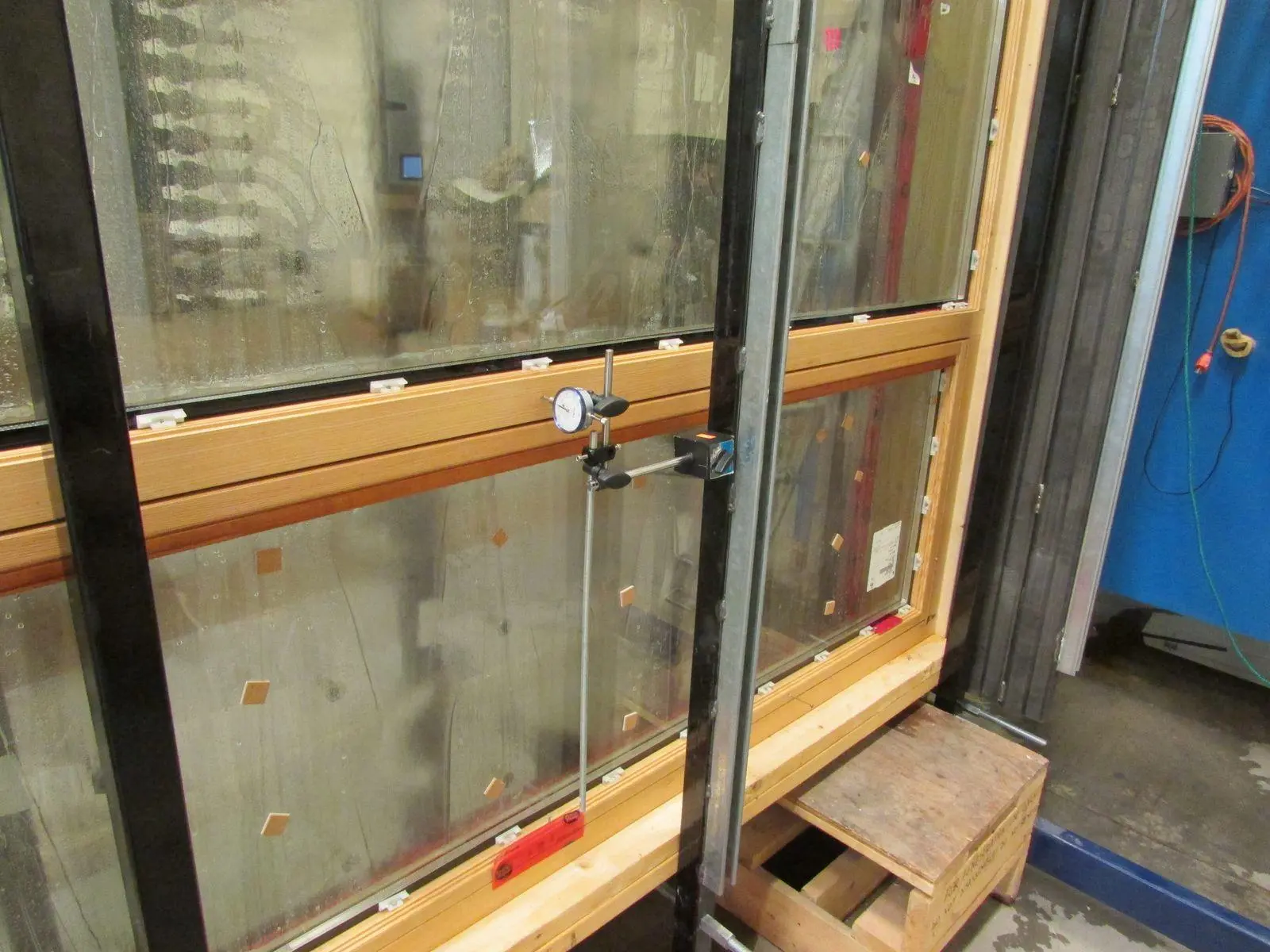
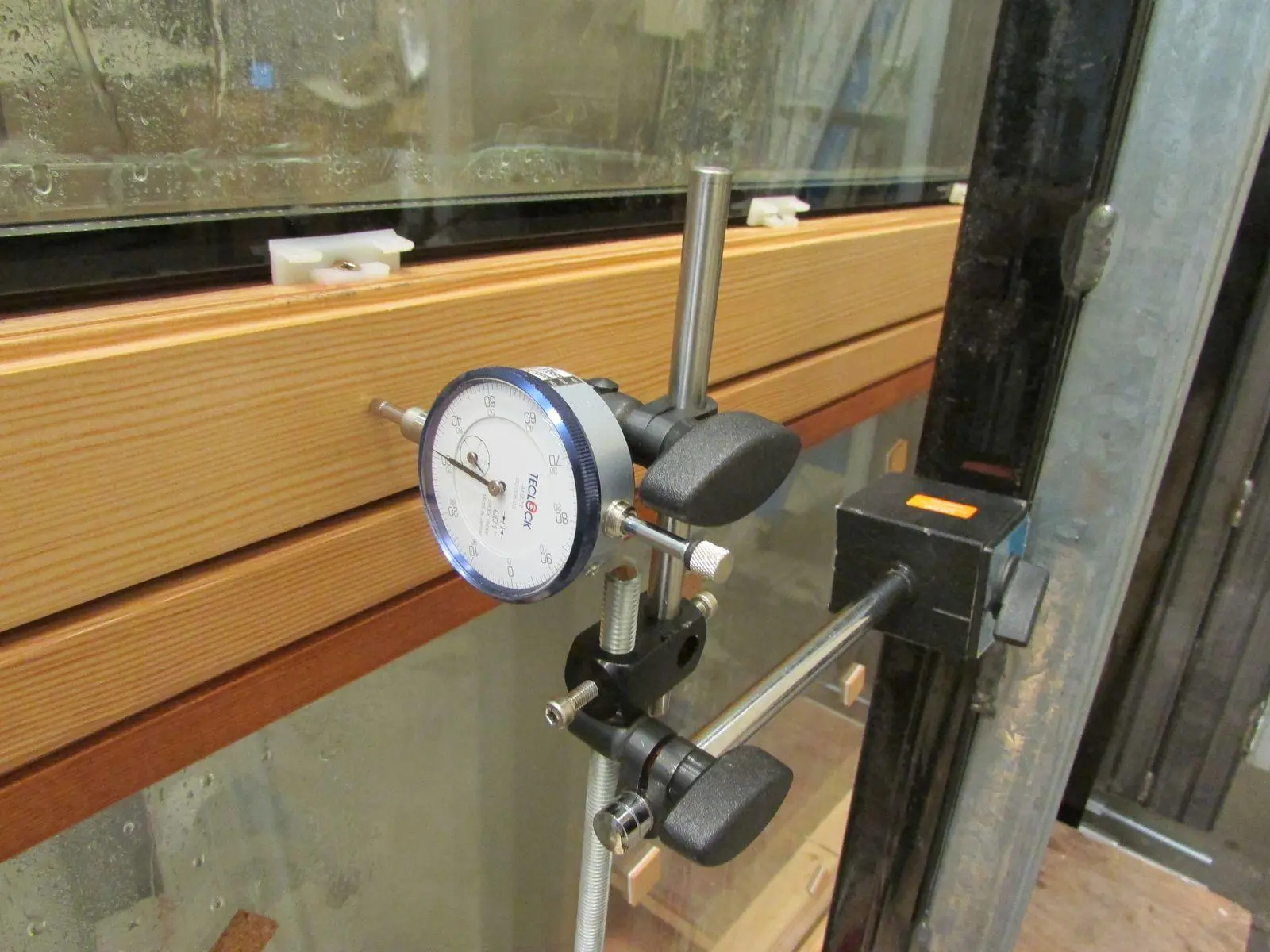
Real product assemblies are mounted, sealed and instrumented for North American fenestration testing. These photographs show dual-action and picture-window assemblies during water and structural testing, including the instrumentation used to measure real results.
Thermal design
Across Fenstür product lines, typical U-values range from 1.58 down to 0.60 W/(m²·K), depending on the product type and glazing package. A high-performance opening depends on the whole assembly: glass, spacer, frame, sash, seals, hardware and installation.
What the numbers mean
The glazing table below compares low-e packages using centre-of-glass U-values and solar heat gain coefficients. The complete window result also includes the frame, sash, spacer, size and operation, so project modelling must use the applicable whole-window data.
NAFS
Applicable product configurations are evaluated for air leakage, water penetration and structural loading. Size, configuration and performance-grade limits should be confirmed during specification.
Passive House
Passive House-oriented systems and glazing packages are available for projects pursuing very low heating demand, improved comfort and resilient envelope performance.
Frequently asked
Fenstür product lines typically range from U-value 1.58 down to 0.60 W/(m²·K), depending on product type and glazing. Double-pane configurations are generally 1.40–1.58, triple-pane configurations 1.10–1.25, and high-performance triple-pane configurations 0.60–0.99. The exact whole-window result varies with the system, size, operability and glass make-up, so project-specific values should be confirmed from the applicable technical package.
Testing and certification apply within defined product, size and configuration limits. Unusually large or specialized openings may require additional engineering or a different compliance path.
Your next step