
The short answer
Choose a tilt-and-turn window when you value controlled ventilation, inward opening, easy cleaning from inside and a multipoint compression seal. Choose a casement or awning window when you prefer outward operation, a familiar North American format or an interior screen.
Neither style is automatically better for every opening. A successful window package usually combines operable windows with picture windows, placing each operation where it contributes the most.
How the two window types operate
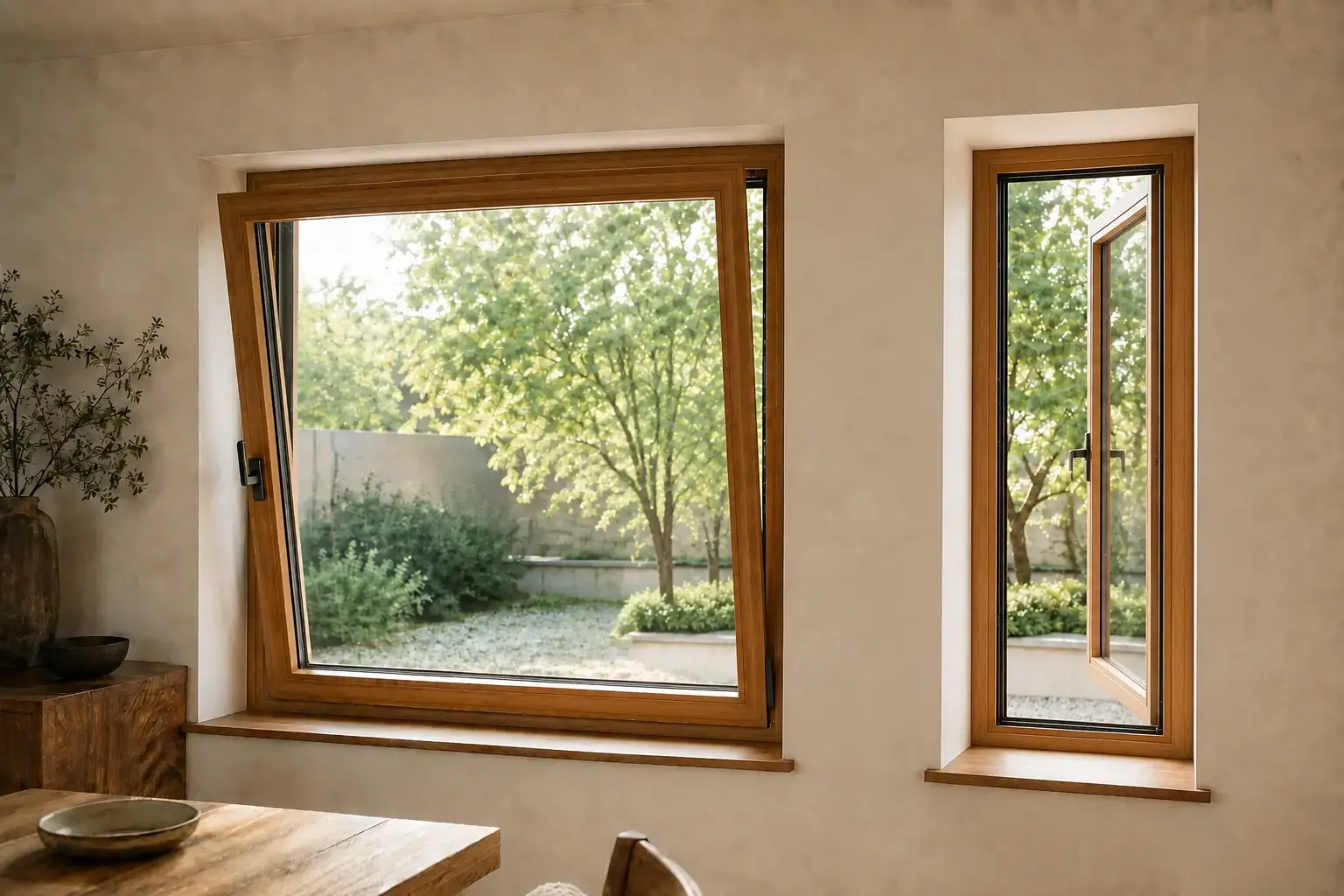
A tilt-and-turn sash has two opening positions controlled by one handle. In the turn position it swings inward like a door. In the tilt position the top of the sash tips inward while remaining secured around the lower corners. This creates useful background ventilation without leaving a sash projecting outside.
A casement sash is hinged at the side and opens outward. An awning window is hinged at the top and also opens outward. Fenstür groups these as the push-out family because the sash moves toward the exterior rather than into the room.
Tilt-and-turn vs. casement at a glance
The practical differences become clearer when the windows are compared around daily use rather than appearance alone.
| Consideration | Tilt-and-turn | Casement / awning |
|---|---|---|
| Opening direction | Inward | Outward |
| Ventilation | Full opening or secure tilt position | Variable outward opening |
| Screen location | Typically exterior | Typically interior |
| Cleaning | Both sides reachable from indoors | Exterior access depends on the opening |
| Hardware | Single-handle multipoint system | Push-out hardware with locking points |
| Interior clearance | Needed for full turn position | No inward swing |
| Exterior clearance | No projecting sash | Sash projects outside |
Performance depends on the complete system
Tilt-and-turn windows are known for robust multipoint hardware and compression against continuous gaskets. That combination can support excellent air, water and thermal performance. A well-designed casement or awning can also perform extremely well, especially when its frame, gaskets, glazing and hardware are engineered as one tested system.
Do not compare the operation alone. Ask about whole-window U-value, tested configuration, glass thickness, frame depth, gasket design, drainage and the maximum sash size supported by the hardware. Centre-of-glass performance does not describe the complete window.
Which operation works better with the architecture?
Tilt-and-turn windows work particularly well in bedrooms, kitchens, upper floors and exposed locations where secure ventilation or interior cleaning is valuable. They also pair naturally with large fixed panes because the same frame language can continue across the elevation.
Casement and awning windows suit projects that need outward operation, interior screens or no sash movement into the room. Awning windows can be useful above counters or in compositions where the opening is wider than it is tall.
For many custom homes, the strongest solution is not choosing one operation everywhere. It is using picture windows for the largest uninterrupted views, tilt-and-turn windows where ventilation and cleaning matter, and casement or awning windows where the room or exterior condition favours outward opening.
Questions to answer before specifying
Review each opening with the architect, builder and manufacturer before finalizing the schedule.
- Will furniture, counters, blinds or curtains interfere with an inward-opening sash?
- Is there exterior landscaping, a walkway or a deck where an outward sash would project?
- Should the screen be inside or outside?
- How important is controlled tilt ventilation?
- Will the exterior glass need to be cleaned from indoors?
- What tested size and weight limits apply to the actual configuration?
- Can adjacent fixed and operable windows share consistent sightlines?
Common questions
Frequently asked questions
Are tilt-and-turn windows more energy efficient than casement windows?
They can be extremely efficient, but operation type alone does not determine performance. Compare the complete frame, glazing, gaskets, hardware, tested configuration and whole-window U-value.
Can tilt-and-turn windows have screens?
Yes. Because the sash opens inward, tilt-and-turn screens are generally installed on the exterior side of the window.
When is a picture window better than either option?
Use a picture window where ventilation is not required and the priority is maximum glass area, fewer frame lines and a simple fixed opening.