
Heat, steam and controlled oxygen
What thermal modification does to wood.
Commercial thermal-modification processes heat wood to elevated temperatures in a carefully controlled, low-oxygen environment, commonly using heat and steam. The treatment changes moisture-sensitive components within the wood rather than adding a wood-look coating.
The resulting material generally absorbs less moisture, moves less as humidity changes and becomes darker through the cross-section. The exact outcome depends on species, temperature, time, equipment and quality control.
Warm colour without pretending to be another material.
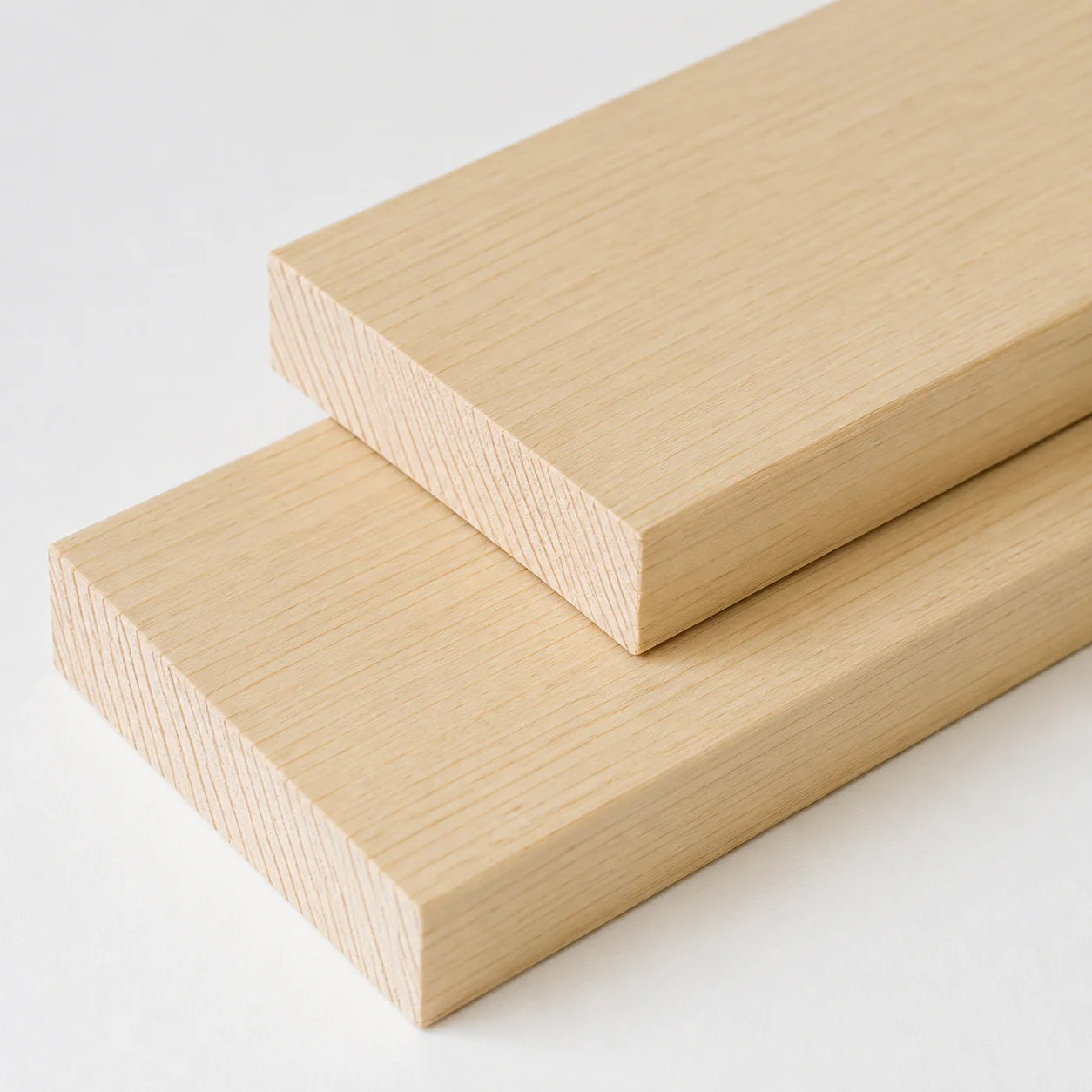
Thermally modified hemlock typically develops a warmer, deeper brown tone that can resemble darker species while retaining its own grain. Uncoated exterior wood will still weather and grey under ultraviolet exposure. A finish may be used when the original colour is meant to be retained.
Why the material is interesting for windows.
Reduced moisture absorption can support more stable behaviour through seasonal humidity changes.
Less swelling and shrinking may benefit carefully engineered joinery and finish performance.
The darker colour is created by modification through the material, not a printed surface pattern.
The finished product retains genuine grain, texture and material variation.
Thermal modification is not a universal durability guarantee.
Heat treatment can also reduce certain strength properties and make some material more brittle. Species, treatment level and component geometry matter. Independent USDA research warns that performance varies by species and exposure, especially in severe decay conditions or close to the ground.
A credible service-life statement must be tied to a specific material supplier, treatment schedule, component design, exposure category, testing and warranty. Thermal modification alone does not justify promising that every unfinished window will remain maintenance-free for 25 years.
Unfinished does not mean unchanged.
If left unfinished outdoors, thermally modified wood can weather toward silver-grey and may develop checking as it experiences sun and rain. That natural change may be acceptable when it is part of the design intent. If the original brown colour is expected to remain, an appropriate UV-resistant finish and maintenance plan should be selected. Exterior exposure may also affect whether a project is better suited to all-wood or wood-aluminum-clad construction.
Windows also include joints, end grain, glazing interfaces, seals and hardware. Long-term performance depends on the entire assembly—not only the decay resistance of a wood sample.
Fenstür's project-first approach.
Fenstür can evaluate thermally modified hemlock for suitable projects, but will confirm material source, treatment documentation, machining behaviour, structural suitability, finish expectations and exposure before representing it as a finished window option. Start by choosing the operation and frame system from our custom wood window range, then review the material against that configuration. Thermal modification alone does not establish a whole-window performance rating or Passive House certification.
This is the difference between a compelling material story and an unsupported claim: real samples, documented inputs, tested details and honest expectations.
Explore Fenstür wood species and factory finishes or discuss a material-specific project.
Frequently asked questions
Is thermally modified hemlock chemically treated?
Thermal modification primarily uses controlled heat and steam rather than conventional preservative chemicals. Confirm the exact proprietary process and supplier documentation for the material being specified.
Will unfinished thermally modified wood stay brown?
Not indefinitely. Outdoor ultraviolet exposure generally causes unfinished wood to weather toward grey. A suitable finish is needed when retaining the original brown colour is important.
Is thermally modified wood maintenance-free for 25 years?
That claim should not be made without product-specific testing and warranty documentation. Service life depends on species, treatment, design, exposure, moisture management and maintenance expectations.
Can Fenstür manufacture windows from thermally modified hemlock?
Fenstür can assess the material for suitable projects, subject to supplier documentation, machining trials, structural requirements, exposure and approved samples.