
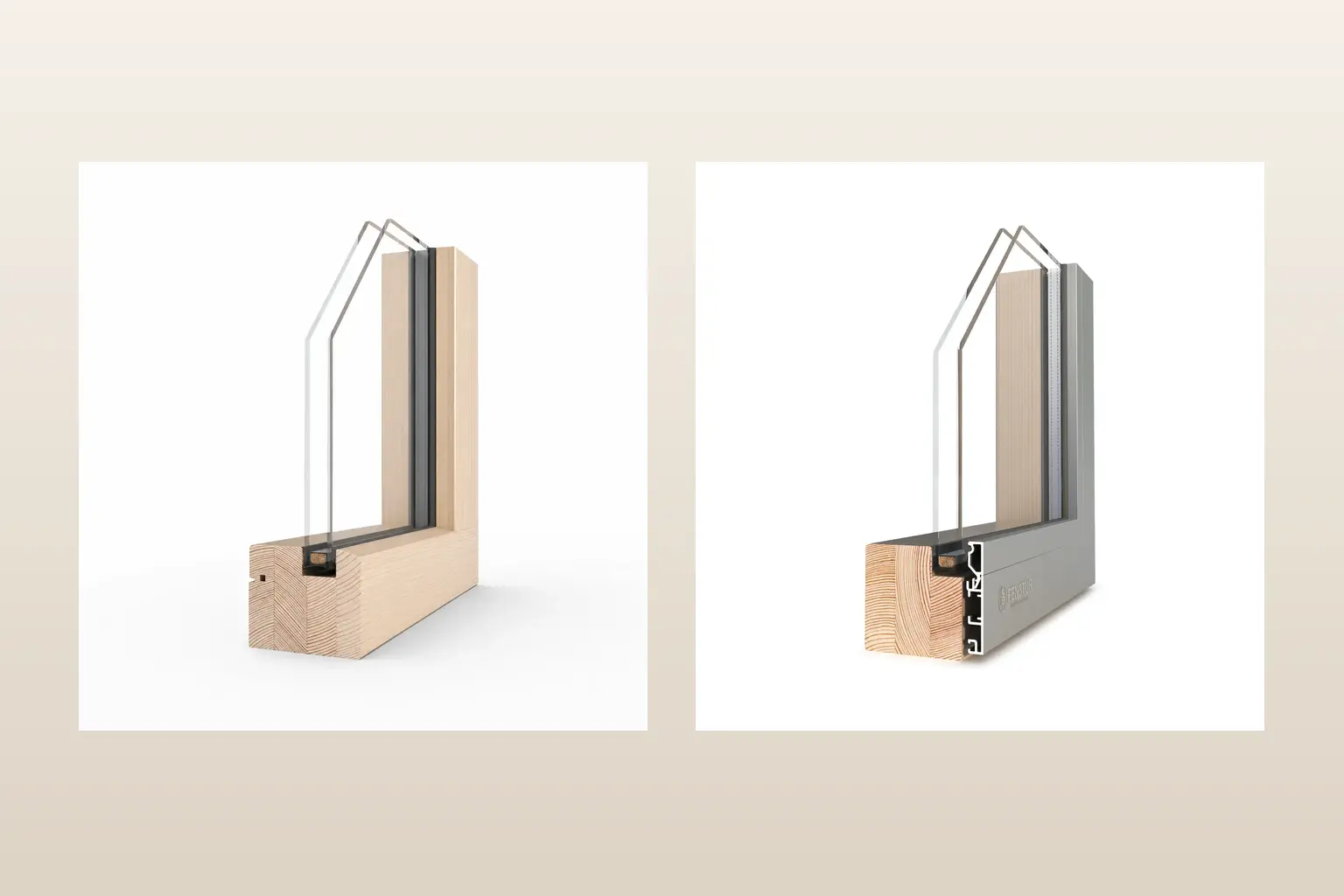
The short answer: both can perform very well.
Heat itself is generally not the deciding issue. Correctly manufactured, factory-finished and maintained all-wood windows can perform successfully in demanding climates. Fenstür supplied Passive House-rated wood windows and doors for builder Matt Risinger’s Texas home, documented in The Build Show’s installation feature. That project adds real-world hot-climate experience to Fenstür’s material guidance.
Wood-aluminum cladding is the premium choice when the project calls for the highest exterior protection, the broadest exterior colour freedom and the lowest routine finish maintenance—particularly on highly exposed elevations.
All wood offers the fullest natural-material expression and a lower initial price. Aluminum cladding adds a durable exterior weather skin while the same genuine wood remains visible inside.
What does not change between the two systems?
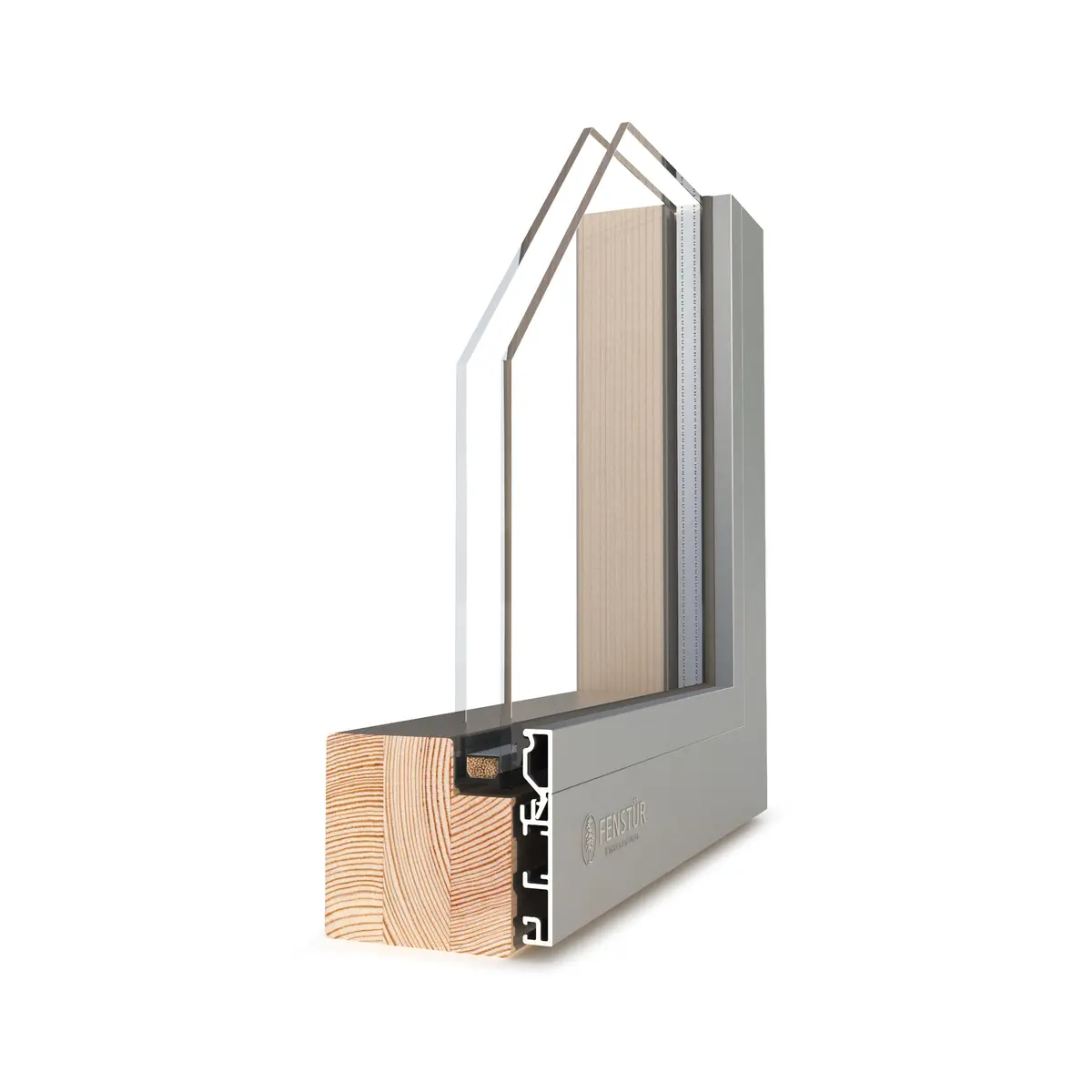
Fenstür's all-wood and wood-aluminum-clad configurations begin with the same substantial engineered timber structure. Cladding is not a replacement frame material; it is a ventilated exterior layer added over the wood.
- Engineered laminated wood for stability and strength
- A genuine wood interior in the selected species and finish
- Continuous gasket and modern multipoint hardware systems
- Double pane, triple pane and specialized glazing options
- Factory finishing and custom colour coordination
- Custom sizes and project-specific configurations
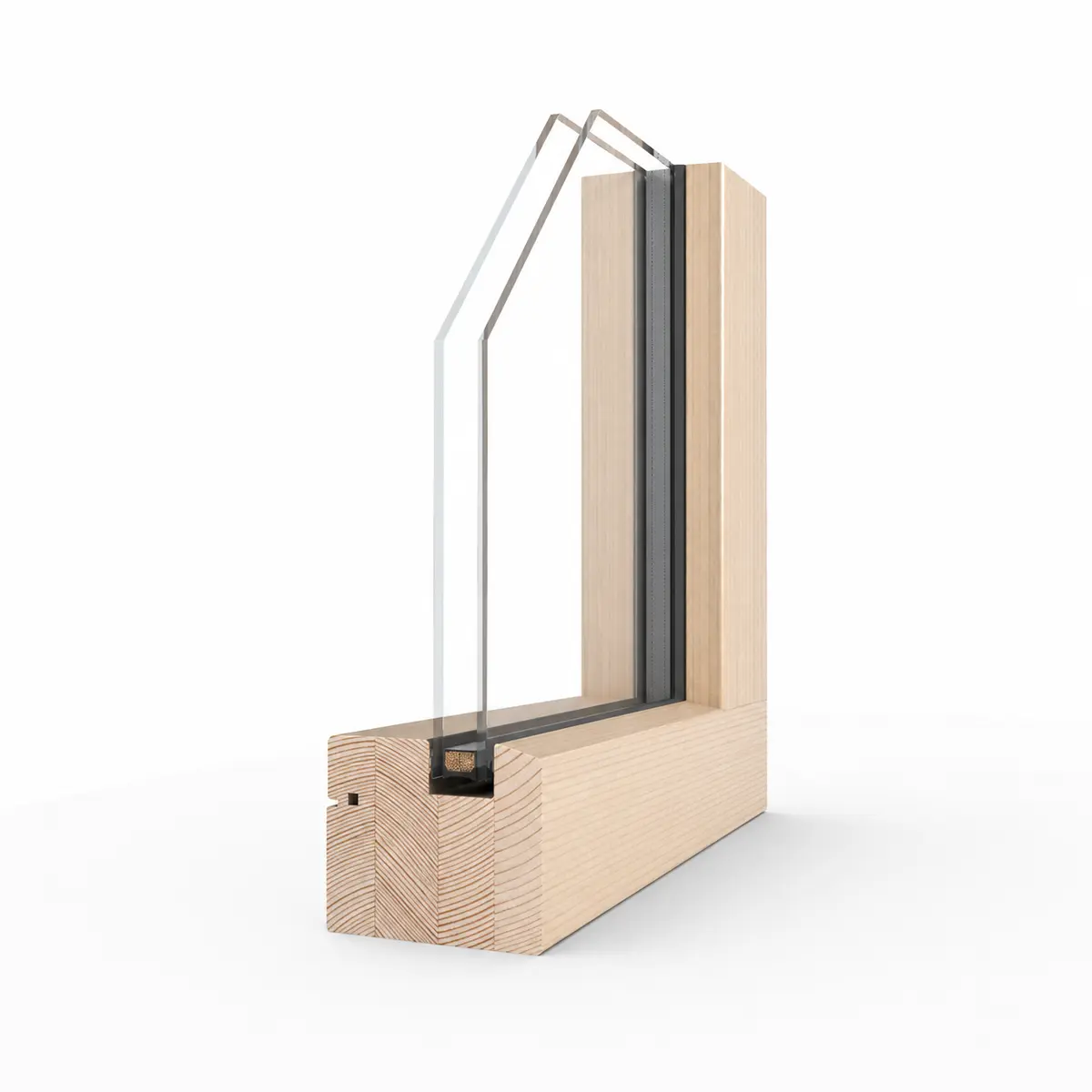
Why choose all-wood windows?
All wood is the clearest expression of the material. It allows the same species, grain and finish language to carry from the room through to the exterior, and it generally has a lower initial cost than the equivalent clad system.
Where all wood excels
- Maximum natural-wood character inside and outside
- Broad species, stain and paint flexibility
- Repairable and refinishable exterior surfaces
- Lower initial investment than aluminum cladding
- Excellent fit for protected or thoughtfully detailed elevations
What all wood asks of the owner
- Inspect the exterior finish periodically
- Repair impact damage promptly
- Use a finish with appropriate UV protection
- Consider overhangs, sill protection and exposure
- Plan for eventual maintenance and refinishing
All wood should not be treated as fragile, but it is a finished natural material. The building design, exposure, handling during construction and follow-through on small repairs all influence its long-term appearance.
Why choose wood-aluminum-clad windows?
Aluminum cladding places a powder-coated, ventilated metal skin over the exterior wood while preserving the warmth and finish of genuine timber inside. It is the premium option when minimizing exterior maintenance and maximizing weather protection are the priorities.
- Lowest routine exterior finish maintenance
- Strong protection on exposed coastal, mountain and severe-weather elevations
- Broad powder-coated colour selection
- Dark exterior colours, including black, without relying on a dark coating directly on exterior wood
- Modern exterior expression with a full wood interior
Cladding adds material, fabrication and detailing, so it raises the initial price. As a planning allowance, it has often added approximately 30% to a comparable all-wood window package, but the actual difference depends on the product, configuration, colour and project.
See Fenstür's full materials, wood species, cladding and factory-finish options.
What about Texas, hail and extreme weather?
For Texas and other climates with severe heat, sun, hail or temperature swings, Fenstür recommends two upgrades for all-wood windows. Together, these form the Fenstür Extreme Weather Package.
Double painting
An additional factory-applied coating cycle increases weather resistance, finish build, durability and long-term protection.
Aluminum weather bars
Protective bars are installed on the horizontal wood surfaces below the glass—the areas most vulnerable to hail, rocks and other physical impacts.
Fenstür's coating supplier tests its systems in demanding environments including Dubai, Siberia and Arizona. In practice, the field problems Fenstür most often sees are not caused by heat alone. They begin when the wood or paint film is physically bruised during handling, installation or a hail event and the damage is left unsealed.
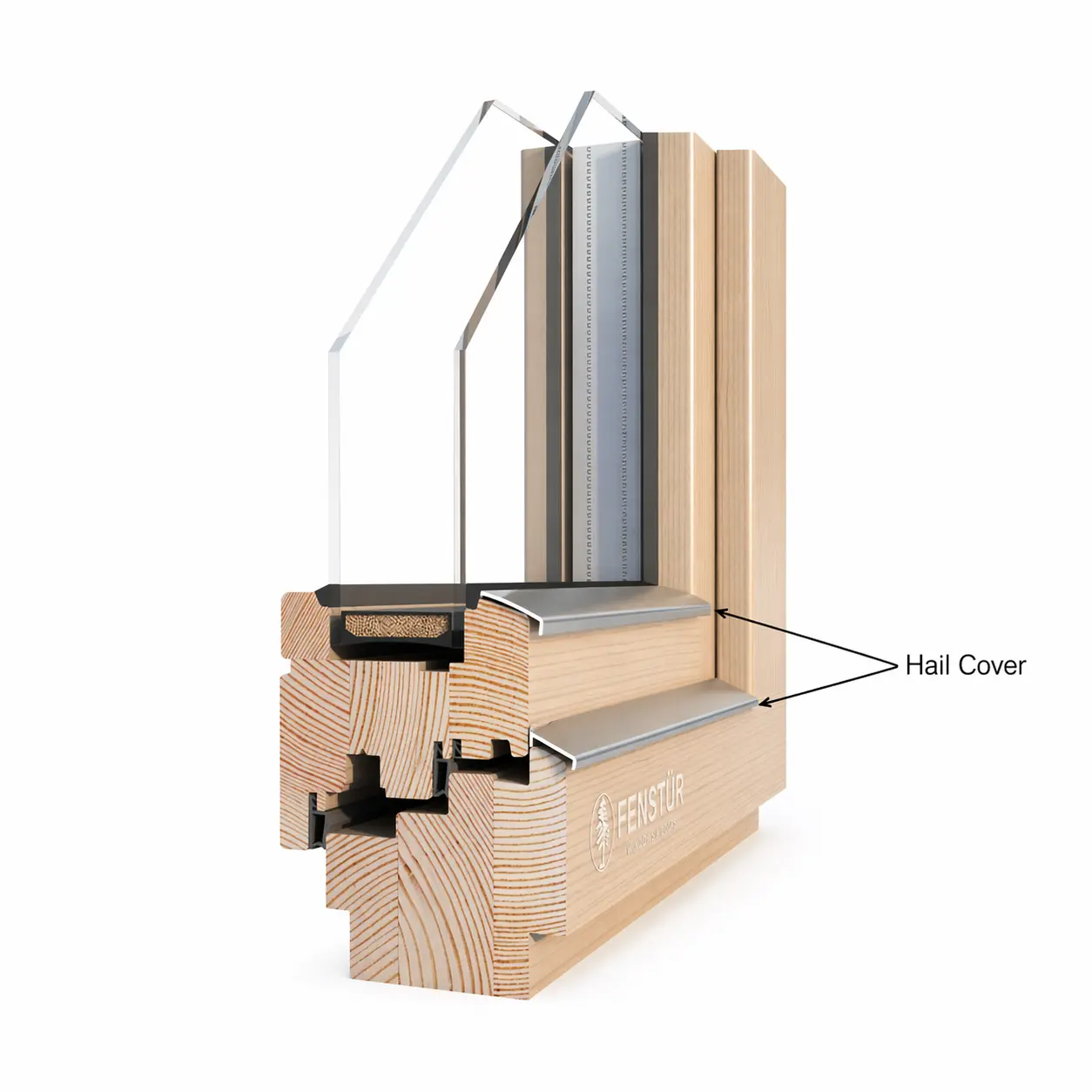
Horizontal surfaces below the glass receive the most direct exposure and are more likely to be struck by hail or debris. A small aluminum protection detail can prevent the impact damage that would otherwise compromise the paint film.
Finish selection matters—especially when the goal is a natural look.
Fenstür generally recommends avoiding a completely clear exterior coat on highly exposed all-wood windows. UV protection comes primarily from pigment, and a truly clear finish contains little pigment to block ultraviolet light.
For projects that want the appearance of freshly finished natural wood, Fenstür developed UV+. It is a very light white-wash stain formulated to stay close to the natural colour of the timber while adding the pigment needed for meaningful UV protection.
- Clear appearance and UV protection are not the same thing
- Lighter pigmented stains can preserve a natural visual character
- Overhangs and installation design reduce direct exposure
- Darker colours and extreme exposure require project-specific review
Most finish failures begin with small, repairable damage.
If wood is bruised, the paint film can crack at the point of impact and allow moisture to enter. Caught early, the repair is straightforward: clean the area and reseal it with the supplied touch-up paint, similar to using a small nail-polish bottle.
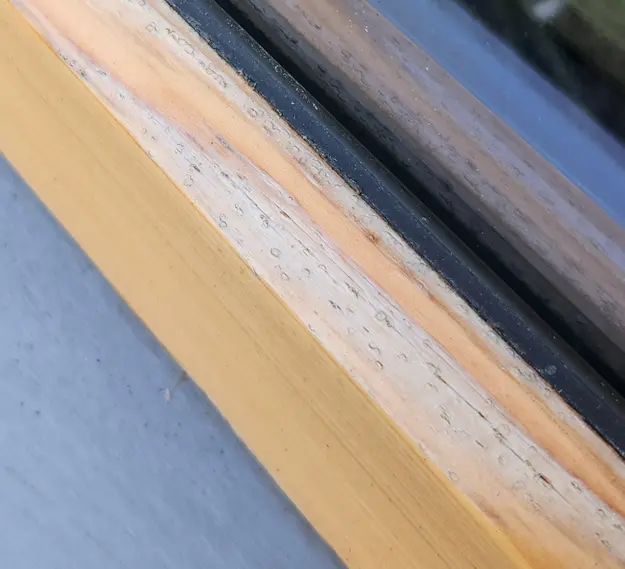
If the opening is left untreated, moisture can eventually spread beneath the coating. The damaged finish may then need to be sanded back and refinished properly. Quick attention is much easier than waiting for a local impact to become a larger finish failure.
Fenstür also offers a maintenance treatment that can be used once or twice a year when the glass is cleaned. It is sprayed onto the painted surface and wiped with a microfiber cloth. The thin protective layer helps fill microscopic scratches, refresh the finish and keep the coating looking new. The process typically takes about 15–30 seconds per window.
When the coating remains intact, the paint system can often provide roughly 10–25 years of service before refinishing is required. Exposure, colour, building design, impacts, cleaning and maintenance all affect the actual interval.
Which exterior should you choose?
| Priority | All wood | Wood-aluminum clad |
|---|---|---|
| Natural material expression | Wood visible inside and outside | Wood inside; powder-coated aluminum outside |
| Initial price | Generally lower | Premium option; often about 30% more as an early allowance |
| Exterior maintenance | Periodic inspection, touch-up and eventual refinishing | Lowest routine exterior finish maintenance |
| Harsh exposure | Works with the right finish, detailing and maintenance; Extreme Weather Package available | Highest exterior protection |
| Colour flexibility | Paint and stain options, with exposure considerations | Broad powder-coated palette, including dark colours |
| Repairability | Wood can be touched up and refinished | Cladding protects the wood; damaged metal components require a different repair approach |
Choose all wood when natural material, repairability and value are central—and when the project team is prepared to detail and maintain the exterior finish. Choose wood-aluminum clad when the priority is maximum exterior protection, dark colour freedom and the lowest maintenance burden.
Frequently asked questions.
Are all-wood windows suitable for hot climates?
Yes. Heat itself is generally not the main issue. Finish selection, UV exposure, physical impacts, building overhangs and maintenance are more important. Fenstür may recommend its Extreme Weather Package for severe climates.
What is included in the Fenstür Extreme Weather Package?
It includes double painting for additional coating protection and aluminum weather bars on vulnerable horizontal wood surfaces below the glass.
Is aluminum cladding completely maintenance-free?
No exterior building product is literally maintenance-free. Cladding substantially reduces routine finish maintenance, but it should still be cleaned and inspected along with seals, drainage paths and surrounding construction.
Why is UV+ recommended instead of a clear coat?
A clear coat contains little pigment, while pigment supplies much of the finish's UV protection. UV+ uses a very light white-wash pigment to retain a natural-wood appearance while improving protection.
How often do all-wood windows need refinishing?
There is no single interval for every exposure. With the finish intact, Fenstür's coating system can often provide approximately 10–25 years before refinishing, but colour, sun, rain, building design, impacts and maintenance all affect the actual result.