
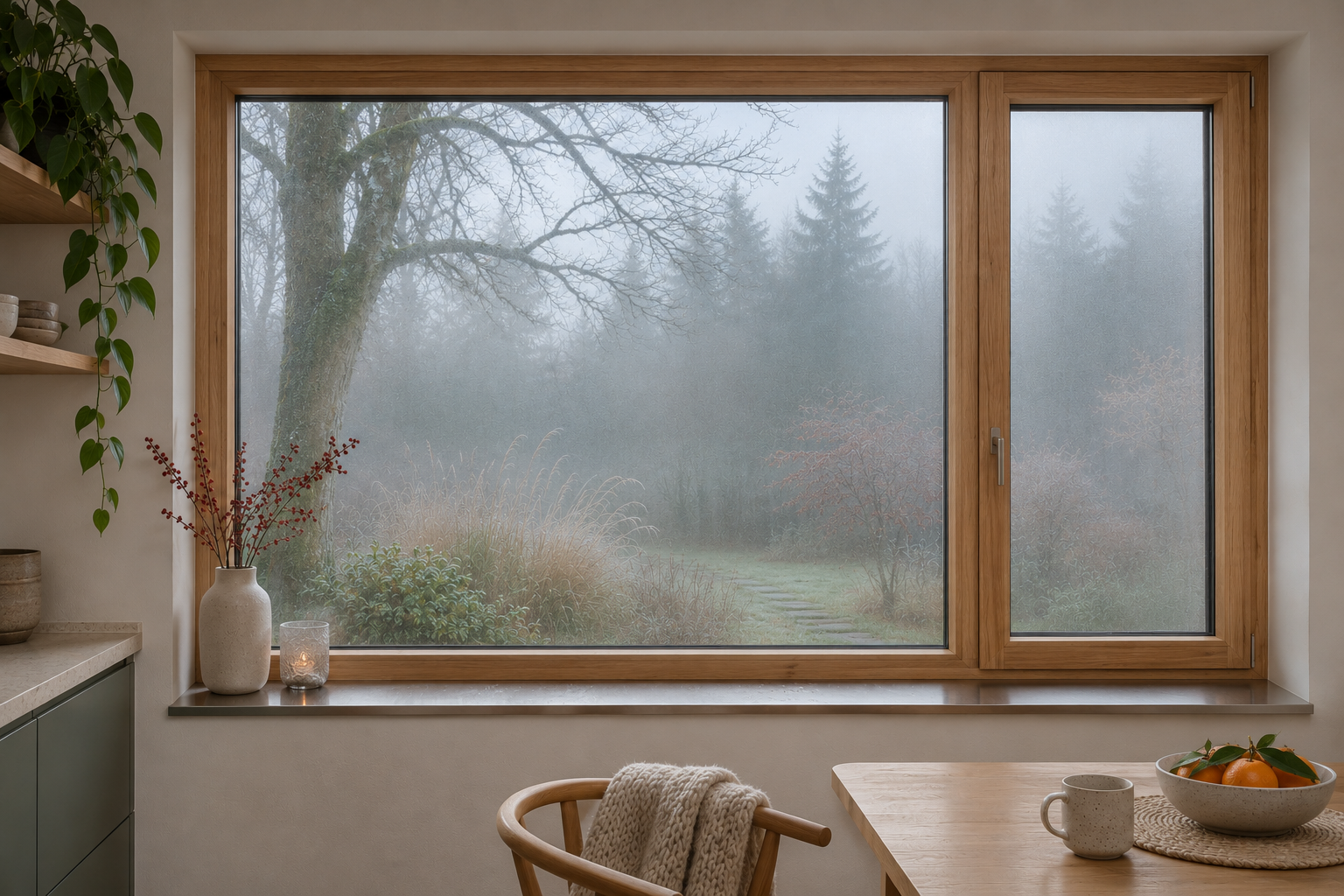
What causes exterior condensation?
Exterior condensation forms much like dew on grass or a car windshield. On a clear, cool night, the outside surface of the glass can become colder than the surrounding air. If it cools below the outdoor dew point, moisture in the air collects on the glass as tiny droplets.
You are most likely to notice it after a clear, calm night when the outdoor air contains enough moisture. As the glass warms or the air begins to move, the dew usually evaporates.
Why does it happen on high-performance windows?
High-performance windows are designed to reduce the transfer of heat through the glass. Double or triple glazing and low-emissivity (Low-E) coatings help keep more indoor heat inside your home.
Because less indoor heat reaches the outside pane, its exterior surface can stay cool enough for dew to form under the right conditions. Exterior condensation may therefore be more noticeable after replacing older windows with more efficient ones.
Why do some windows have dew and others don’t?
The direction a window faces, exposure to the open sky, shade, nearby trees, roof overhangs and airflow can all affect the temperature of the glass. A small difference may be enough for dew to form on one window while another stays clear.
Do I need to do anything?
Usually, no. Exterior dew is temporary and normally clears as conditions change. You can wipe the outside surface if you need to clear your view, provided you can reach it safely. Exterior condensation does not mean the window is leaking or that the sealed glass unit has failed.
Can I reduce exterior condensation?
If morning dew regularly obscures your view, you may wish to try an exterior glass treatment such as Rain-X® Original Treatment or a similar product suitable for home windows. Water-repellent treatments help water bead on the glass, although they may not prevent condensation or fogging in every condition.
Follow the product instructions and check compatibility with your glass and any exterior coatings. Apply only to the glass and keep it away from wood finishes, seals, hardware and cladding. Rain-X advises avoiding nearby vinyl and aluminum surfaces. Treatment is optional and does not change how well the window insulates.